
Teaching Children About the Mass at Home
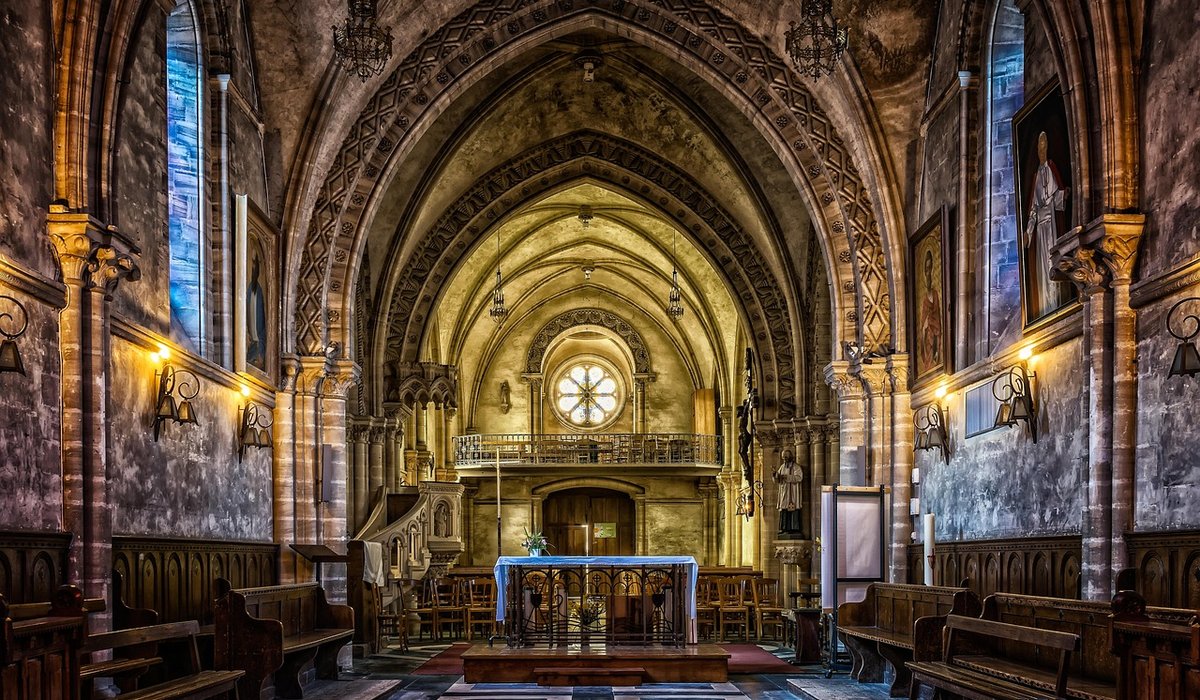
A Ministry of Service at the Altar
At almost every Mass offered in our parish, you will see them: ordinary men and women of Cheadle, dressed in an alb, stepping quietly into the sanctuary at the sign of peace. They are Eucharistic Ministers — more formally known as Extraordinary Ministers of Holy Communion — and their role is one of the most visible ways lay people serve the Church at the altar.
The word "extraordinary" is important. The ordinary ministers of Holy Communion are the ordained: the priest and the deacon. Eucharistic ministers are called upon when the number of communicants or the practical demands of the liturgy make it necessary, so that the faithful may receive the Body and Blood of Christ with reverence and without undue delay. It is a delegated ministry, entrusted to specific people by the parish priest, and it is always exercised in communion with him.
Who Is Called to This Ministry
Not everyone who would like to serve is automatically appointed, and that is as it should be. The Church asks that a Eucharistic Minister be a baptised and confirmed Catholic, in good standing, whose life gives witness to the faith they are handling. In practice, parishes in our diocese look for a few particular things:
- A settled faith life — regular attendance at Mass, a prayer life, and a genuine love for the Eucharist rather than a desire for a visible role.
- Maturity and reliability — most parishes ask that ministers be at least eighteen, and often a little older, able to commit to a rota and to arrange their own cover when they cannot attend.
- Formation and commissioning — training in the theology and practice of the ministry, followed by a formal commissioning, usually at a Sunday Mass, where the priest blesses and mandates each minister.
- Safeguarding and DBS clearance — essential for anyone who will take Communion to the sick, the housebound or young people, in line with diocesan safeguarding requirements.
If you feel drawn to this ministry, the first step is not an application form but a quiet conversation with the parish priest or one of the coordinators.
What Actually Happens at Mass
The practicalities matter, because reverence is built out of small, consistent habits. A typical Sunday looks something like this:
- Arrive fifteen to twenty minutes early, vest in the sacristy, and check with the sacristan about hosts, chalices and the number of stations needed.
- Take your place in the sanctuary after the sign of peace, without fuss or crossing in front of the altar unnecessarily.
- Approach your station calmly and make eye contact with each communicant, holding the host or chalice steadily.
- Say the words clearly — "The Body of Christ", "The Blood of Christ" — and allow the person to respond "Amen" before moving on.
- Know what to do if a host is dropped: it is reverently retrieved and consumed, never brushed aside. If in doubt, signal the priest.
- Return to the altar when the flow of communicants thins, so no one is left waiting at the back of the church.
- Help with the purification of the vessels afterwards at the credence table, following the sacristan's instructions.
Gluten-free hosts, the chalice, intinction and the needs of those with disabilities all have their own small protocols. Nothing is too trivial to ask about, and no question is embarrassing.
Beyond the Church Building
Some of the most valuable work happens far from the sanctuary. Ministers who take Communion to the sick and housebound visit homes, care homes and hospital wards across Cheadle and the surrounding area, bringing the Blessed Sacrament in a pyx and leading a short liturgy of the Word with the person they visit.
That visit is rarely only about the sacrament. It is a friendly face, a chat about the family, a prayer for someone who cannot get out. Ministers are asked to keep confidences, to note anyone whose condition changes, and to let the parish office or priest know when someone is in need of the sacraments of healing.
The Inner Life of a Minister
It is easy for any ministry to become routine. The safeguard against that is prayer. Ministers are encouraged to arrive early enough to sit quietly before Mass, to fast in the customary way, and to remember that what they distribute is not bread and wine but the living Christ.
Ongoing formation — a diocesan day, a parish evening of reflection, time before the Blessed Sacrament — keeps the ministry fresh and prevents it becoming merely a rota to be filled. Most ministers will tell you that serving has deepened their own love of the Mass far more than they expected.
Practical Points and Offering Your Service
If you are already commissioned, a few habits make the whole rota work more smoothly: check the rota well in advance, arrange your own swap rather than leaving a gap, arrive early, dress appropriately under your alb, and stay for a few minutes afterwards if the sacristan needs help.
If you are wondering whether this is for you, speak to the parish priest. Ask to shadow a minister for a Sunday or two. Then pray about it, and let the discernment be a shared one between you, the priest and the wider parish community. Few things are more quietening, or more humbling, than standing in front of a stranger and saying, "The Body of Christ" — and few things do more to build up the life of a parish like ours in Cheadle.
LEAVE A COMMENT